
Car seat cover designs and materials.
A car-care guide
Choose a seat-cover design around your cabin, the colours you like and the actual material sample.
General guidance from 1.618 Dettagli Auto, Lajpat Nagar, New Delhi.
Begin the discussion
Start with your existing cabin
Use the dashboard, doors and existing trim as the starting point for your seat-cover design. Decide whether the seats should blend in or introduce contrast. A single reference photograph can help explain the direction you prefer.
Then settle the panel layout, stitching and vehicle-specific fitment. A clear design brief is more useful than a broad request for a luxury interior.
Make a short list of the details that matter: main colour, accent colour, stitching and panels to change. Add any worn areas you want assessed. Our upholstery service covers the discussion of the actual work on your vehicle.
Bring the model, variant and seating arrangement to our C-32, Lajpat Nagar II studio. Include any relevant seat features in the brief. That keeps the design discussion tied to your car, rather than to a generic package photograph.
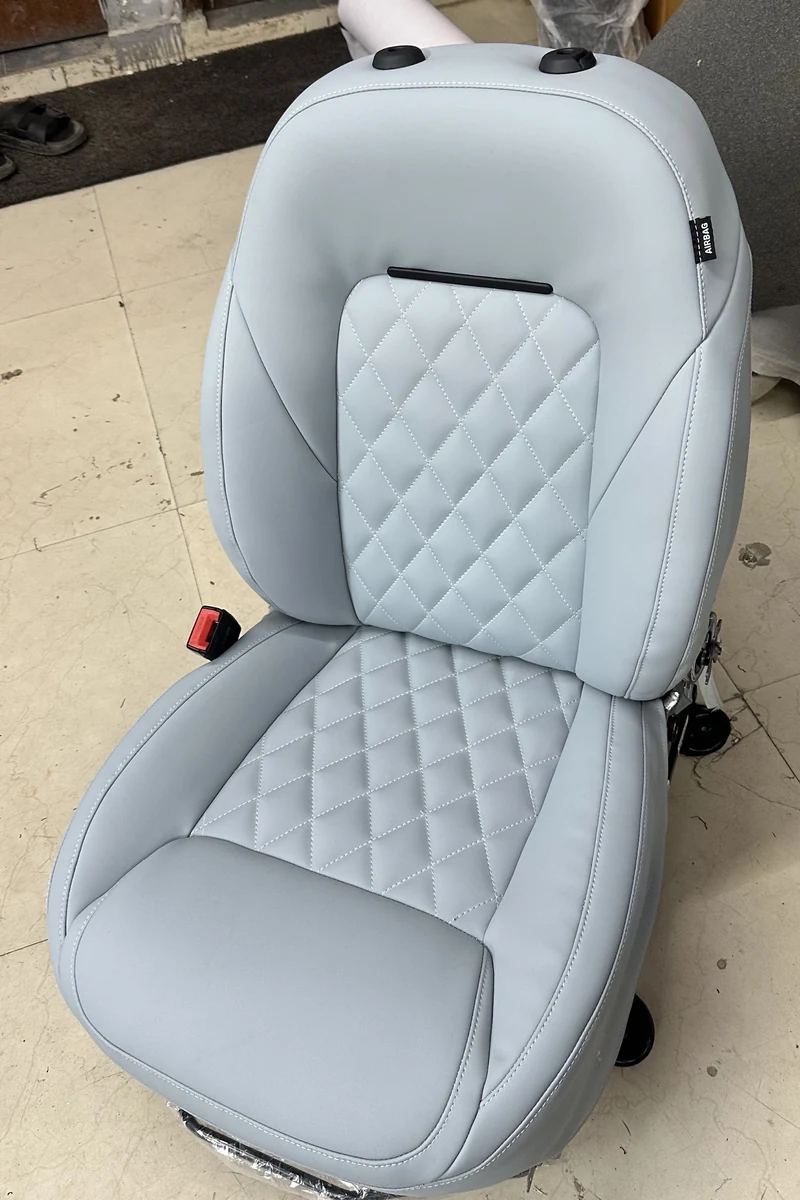
Design references
Compare colour, panels and stitching
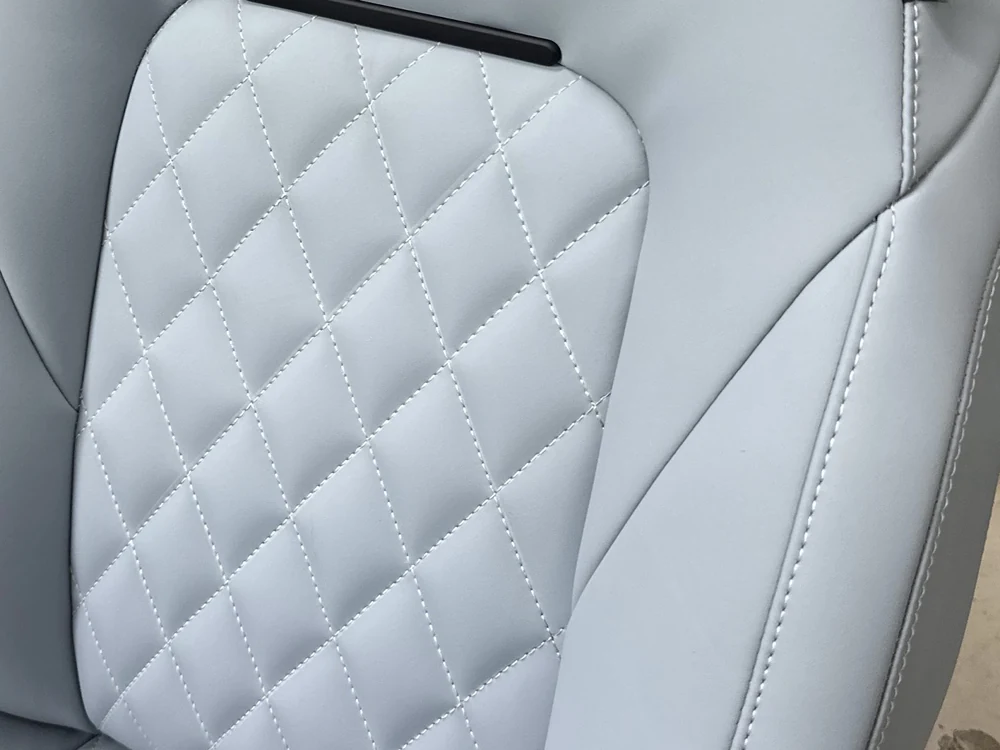
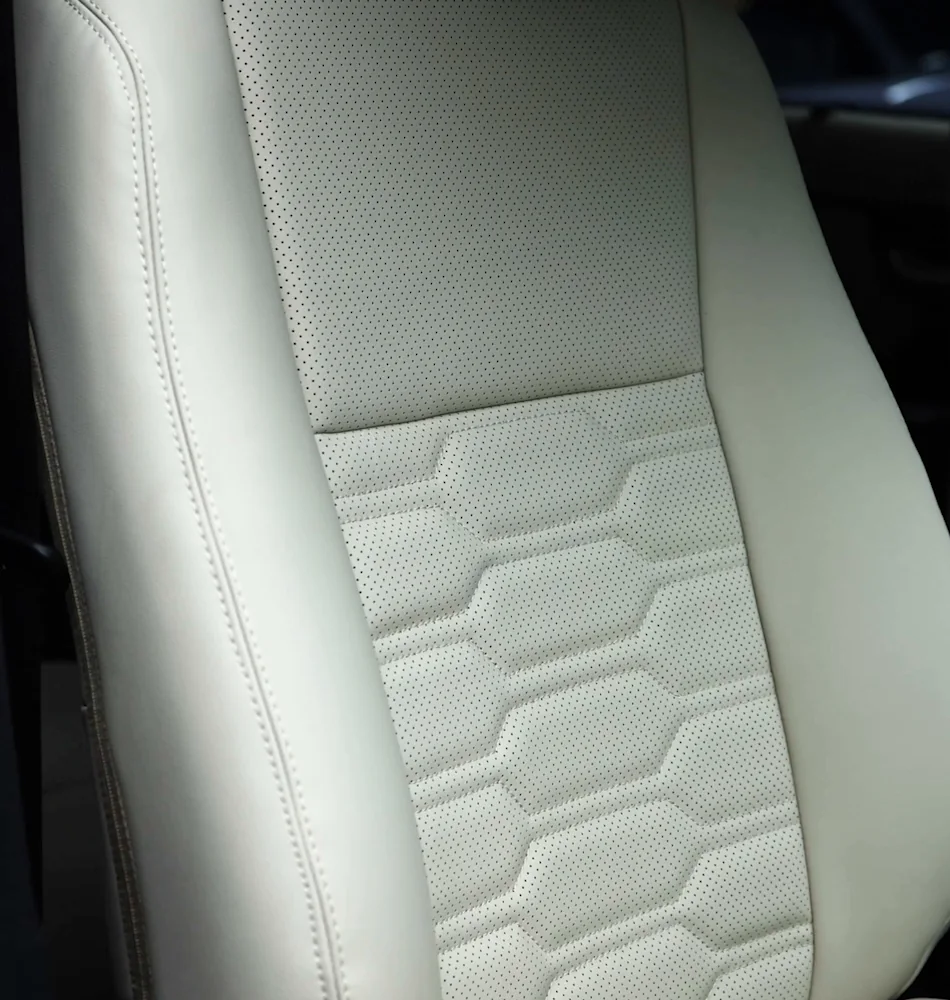
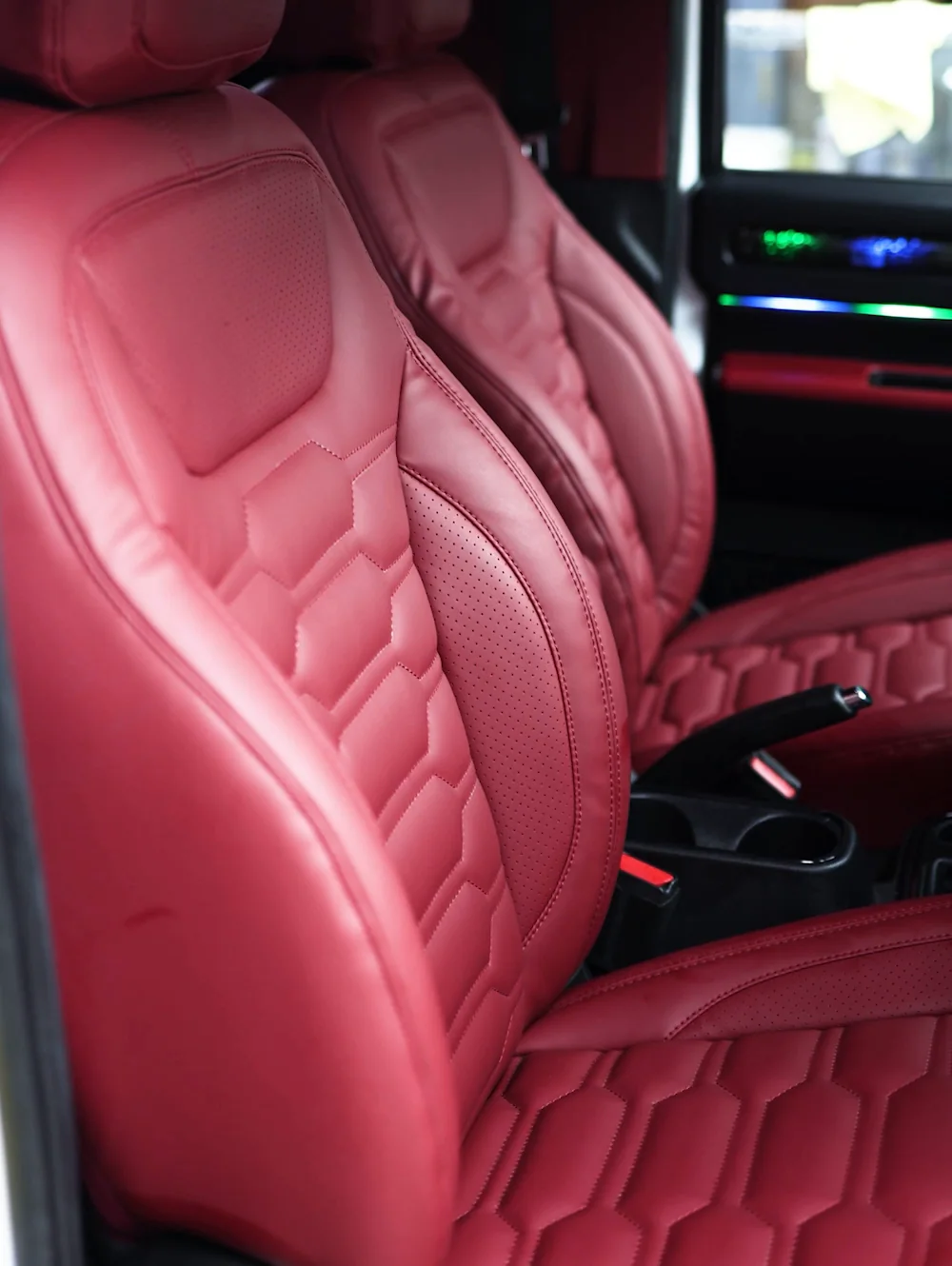
Compare the main colour, contrast panels and stitch lines in these seat-cover photographs. Look at the whole seat before focusing on a small detail. An attractive insert still needs to work with the bolsters, headrest and surrounding cabin.
Use close-up views for pattern placement and wider views for the overall balance. Then compare the proposed combination with a physical material sample. Photographs are design references, not proof of material grade or compatibility with your vehicle’s safety systems.
Colour and texture can look different on a screen and in normal cabin light. Viewing the material and thread together helps explain the intended combination; a photograph alone cannot specify it.
Appearance choices
Simple, sporty and quilted seat designs
Choose a simple, sporty or quilted direction by deciding where you want contrast and pattern. A restrained design can keep attention on the cabin as a whole. A stronger accent can make selected inserts or stitch lines the focus.
For a two-tone layout, mark the panels that receive each colour. With diamond or quilted patterns, settle the scale and placement as well as the shape. Include the rear row in the discussion, even if your favourite reference shows only the front seats.
| Design direction | Detail to compare | Put in the brief |
|---|---|---|
| Restrained | Main colour and limited contrast | Material reference and cabin match |
| Sporty | Accent panels and stitch lines | Exact areas receiving each detail |
| Diamond or quilted | Pattern size and placement | Construction and agreed sample |
| Two-tone | Seat colours beside existing trim | Seats only or wider interior work |
Know the material
Choosing leather, nappa and other materials
Choose the material from its supplier specification and sample, including when the proposal uses leather or nappa labels. Settle the type of work first: a removable cover, replacement upholstery or another treatment. Those are different scopes, even when described casually as seat covers.
Record which material goes on each area. Inserts, side panels and other components should be identified individually if the proposal uses different materials. Match the sample references to that panel list so the final choice is easy to understand.
The supplier specification and matching sample identify the material and its care requirements. Labels such as premium or leather-look do not identify a grade or origin.
Before approval
Check fitment and seat-airbag compatibility
Fitment and airbag compatibility need confirmation for the exact cover, vehicle and variant before approval. Include seat-mounted airbags, belts, controls and other relevant features in the discussion. A design choice should leave the function of those features fully accounted for.
Have a qualified installer check the exact cover against your vehicle variant, seat construction, controls and any seat-mounted airbags. Request supplier compatibility evidence before agreeing the fitment. Keep that information specific to the proposed materials and construction. Resolve any unanswered safety-related detail before authorising the work.
Cabin palette
Seat-cover colours for a white car
Choose seat-cover colours for a white car by matching the cabin, rather than the exterior paint alone. Compare the proposed sample with the dashboard and doors. Then decide whether you prefer a close match, two-tone layout or visible accent.
View the main colour, secondary material and thread together. A colour you like on its own may be different from the combination you want across a full seat. Keep the selected sample and thread references in the agreed brief.
If the project extends beyond seats, list each extra area. Headrests, armrests and door panels need a clear scope rather than a broad interior label. Also record what stays unchanged, so the finished design has a deliberate boundary.
After handover
How to care for the chosen material
Follow the cleaning instructions for the supplied material and its finish. Keep those instructions with the product details at handover. They should identify suitable products and methods, along with any treatments to avoid.
For a new mark, use the recorded material reference when contacting the supplier or installer. Check an unfamiliar cleaner before applying it across the seat. Similar-looking finishes can have different instructions, so a social-media demonstration is a poor substitute for the supplied guidance.
Agree the work
Agree the design and installed price
An installed seat-cover price depends on the materials, panel layout and work involved. Repairs, removal and refitting are distinct from the design choice. GST is extra.
Use the upholstery service for the assessed price discussion. For a wider cabin project, compare ambient lighting and headliner options separately. Each part can have its own materials, fitment details and care instructions.
The design extends across the seating rows included in the project, including any headrests and armrests. A front-seat reference alone leaves the rest of the cabin unspecified.
Keep any required repairs separate from your preferred appearance changes. Describe the worn area and let the assessment establish the proposed work. If that assessment changes the material choice or included panels, review the revised brief and price together before proceeding.
Keep the supplied material references and care instructions with the job record. A later question can then start with the actual upholstery, not a photograph of a similar interior.
- Vehicle model, variant and seating configuration.
- Material and supplier reference for each area.
- Main colour, contrast colour and thread references for every included seating row.
- Panel layout, pattern placement and unchanged areas.
- Vehicle-specific fitment and compatibility information.
- Installed figure, GST, timing and written support terms.
A few answers
Questions before deciding
Which seat-cover design is best?
Choose the direction that suits your cabin and preferred amount of contrast. Then settle the samples, panel layout and fitment for your vehicle.
How do I confirm nappa leather?
Use the actual supplier specification and sample reference for the proposed material. Keep that description in the quotation.
How is airbag suitability confirmed?
For a seat with an airbag, ask for supplier evidence specific to the proposed cover and vehicle variant, and have a qualified installer review it. A generic airbag-compatible label is not a vehicle-specific approval. This detail belongs in the fitment review before approval.
What colour suits a white car?
Start with the existing cabin trim. Compare the main colour, accent and thread together before choosing the final combination.
Where are seat-cover prices?
Use our upholstery service to discuss your vehicle, selected materials and panel scope. The installed quotation should identify the included work and extra charges.
Message the studio with your car model and the finish or work you want to discuss.
Studio visit
Prefer to see the options in person?
Arrange a studio visit to compare design ideas and actual material samples for your vehicle.
C-32, Lajpat Nagar II, New Delhi 110024
Listed hours: daily, 10 am–9 pm.
Directions
Call the studio
Use WhatsApp to send your car model and preferred visit date.
Contact details & listed hours
Related reading: upholstery, ambient lighting, accessories.
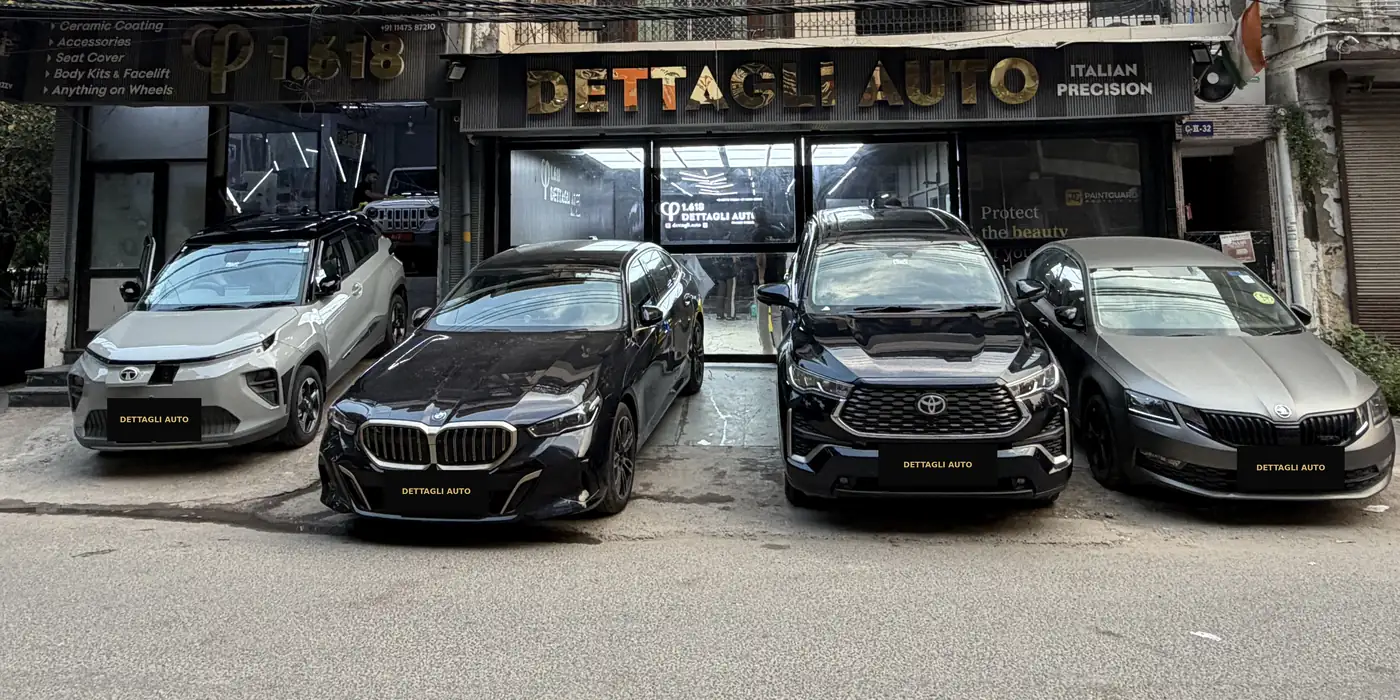
Photographed in our studio.